











Low Voltage Door Sensor Power Supply – Power It Right!
⚠️ The Problem :
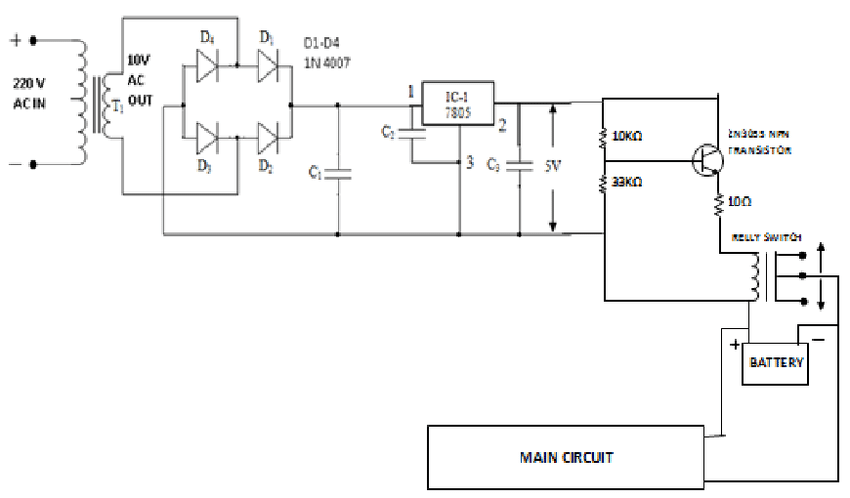
Most door sensors used in home automation or security systems operate at 3.3V or 5V, but standard power sources like SMPS or adapters usually output 12V or higher. Directly connecting these can damage the sensor or microcontroller. Beginners often make this mistake during prototyping.
✅ The Solution :
To safely power low-voltage door sensors, use a voltage regulator or DC-DC buck converter to step down 12V to 5V or 3.3V. Buck converters are efficient and compact, making them ideal for embedded projects.
🔍 Practical Example :
You’re using a reed switch-based door sensor with an ESP8266 (3.3V logic). Your adapter provides 12V. By adding a 3.3V buck converter, you can power the ESP and sensor safely without overheating or instability.
🧮 Sample Calculation :
Say your sensor system draws 200mA at 3.3V:
P=V×I=3.3V×0.2A=0.66W
Make sure the buck converter is rated for ≥ 1W output and accepts 12V input.
🛒 Product Suggestion – Made in India :
Power your sensor setup reliably with DC-DC buck converters and voltage regulators, proudly Made in India:
✅ Shop now at SmartXProKits.in
Support our work and India’s innovation—buy from our Make in India site!