The 37-in-1 Sensor Kit is one of the most popular starter kits for students, hobbyists, and engineering beginners in India. If you are planning to buy sensor kit India 37 in 1, this guide will help you understand what’s inside and how to use each module effectively.
This kit is perfect for Arduino projects, robotics learning, and school science experiments, making it a must-have for STEM education.
What is a 37-in-1 Sensor Kit?
A 37-in-1 sensor kit is a collection of commonly used electronic sensor modules designed to work with Arduino and other microcontrollers. These sensors help detect environmental changes like light, temperature, motion, sound, and more.
Why Buy Sensor Kit India 37 in 1?
Ideal for beginners and students
Supports multiple Arduino projects
Cost-effective compared to buying sensors separately
Perfect for school and college practicals
Helps in hands-on STEM learning
Complete List of Sensors in 37-in-1 Kit
Below is a typical list of modules included:
(Note: Exact modules may vary slightly depending on supplier in India.)
How to Use Sensor Kit with Arduino
Using the sensor kit is simple:
Connect sensor VCC to 5V (or 3.3V)
Connect GND to Arduino GND
Connect signal pin to Arduino digital/analog pin
Upload sample code
Monitor output via Serial Monitor
Most sensors come with digital (DO) and analog (AO) outputs for flexible use.
How Each Sensor Works (Quick Overview)
Temperature Sensor
Measures ambient temperature using analog voltage output.
Sound Sensor
Detects sound intensity using a microphone module.
Light Sensor (LDR)
Changes resistance based on light intensity.
Flame Sensor
Detects fire or flame using infrared light sensitivity.
IR Obstacle Sensor
Used in robotics for obstacle detection.
Tilt Sensor
Detects orientation or angle changes.
Hall Effect Sensor
Detects magnetic fields.
Touch Sensor
Detects human touch using capacitive sensing.
Vibration Sensor
Detects vibration or shock.
Rain Sensor
Detects water presence or rainfall.
Gas Sensor
Detects harmful gases like smoke or LPG.
Rotary Encoder
Used for position and rotation detection.
Joystick Module
Used for directional input (X-Y axis).
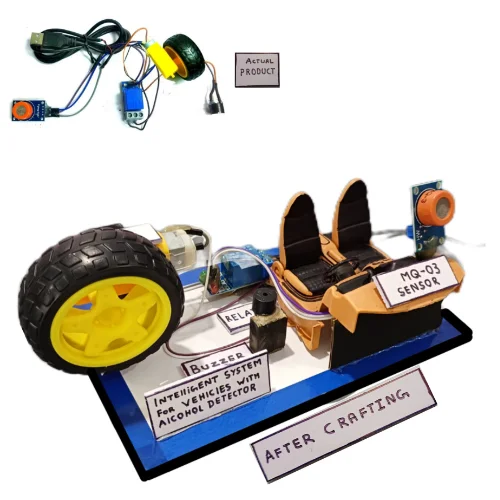
Relay Module
Controls high voltage devices using low voltage signals.
Laser Module
Used for light-based experiments and detection.
Buzzer Module
Produces sound alerts.
RGB LED Module
Displays multiple colors.
Best Projects Using 37-in-1 Sensor Kit
Who Should Buy This Kit?
Where to Buy Sensor Kit India 37 in 1
You can purchase the kit from trusted online stores in India. Make sure to choose:
Tested modules
Proper documentation
Arduino compatibility
Support for beginners
Final Thoughts
The 37-in-1 sensor kit is one of the best investments for anyone starting with electronics and Arduino. If you are planning to buy sensor kit India 37 in 1, this kit offers everything you need to build multiple real-world projects.
It not only improves practical knowledge but also builds strong fundamentals in electronics and robotics.