


















What is Atal Tinkering Lab? — Complete Setup Guide for Schools in India

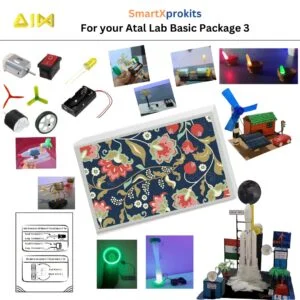

India is rapidly moving towards innovation-driven education, and one of the most impactful initiatives is the Atal Tinkering Lab (ATL) introduced under the Atal Innovation Mission (AIM).
If you are a school owner, principal, or educator, setting up an ATL can transform your institution into a hub of creativity, innovation, and practical learning.
In this blog, we’ll cover everything about Atal Tinkering Lab setup India schools, including eligibility, funding, equipment, and step-by-step setup process.
What is Atal Tinkering Lab (ATL)?
An Atal Tinkering Lab is a dedicated space in schools where students can learn STEM (Science, Technology, Engineering, Mathematics) through hands-on activities.
These labs encourage students to:
Build real-world projects
Learn robotics, electronics, and coding
Develop problem-solving skills
Think like innovators and entrepreneurs
ATL is part of the Atal Innovation Mission (AIM) by NITI Aayog, Government of India.
Objectives of Atal Tinkering Lab
The main goals of ATL are:
Foster creativity and innovation among students
Promote practical learning over theoretical learning
Encourage DIY (Do-It-Yourself) culture
Prepare students for future technologies like AI, IoT, and Robotics
Benefits of ATL for Schools
Setting up an ATL provides multiple advantages:
For Students
Hands-on STEM learning
Exposure to robotics and electronics
Participation in national competitions
Improved problem-solving skills
For Schools
Government recognition
Increased admissions and reputation
Access to funding and resources
Modern education infrastructure
Eligibility Criteria for ATL Setup in India
To apply for an ATL, schools must meet certain criteria:
Recognized school (government/private)
Classes from 6th to 10th (or higher)
Availability of 1500 sq. ft. space (approx.)
Commitment from school management
Funding and Grants for ATL
The Government of India provides financial support:
₹10 Lakhs for setup (equipment & infrastructure)
₹10 Lakhs for operational expenses (over 5 years)
This makes ATL one of the most affordable ways to build a high-tech lab in schools.
Complete Equipment List for ATL Setup
To successfully implement an ATL, schools need:
Basic Electronics Components
Resistors, capacitors, ICs
Breadboards and jumper wires
Sensors and modules
Advanced Learning Kits
Arduino and microcontroller boards
Robotics kits
IoT development kits
Fabrication Tools
3D printer
Hand tools and safety equipment
Software & Digital Tools
Coding platforms
Simulation software
👉 Schools can also include ready-made DIY kits for faster learning and project building.
Step-by-Step ATL Setup Process
Step 1: Application Submission
Apply through the Atal Innovation Mission official portal when applications open.
Step 2: Selection Process
Schools are shortlisted based on:
Infrastructure
Vision
Past academic performance
Step 3: Fund Approval
Selected schools receive grant approval from AIM.
Step 4: Lab Setup
Prepare space
Purchase equipment
Install tools and kits
Step 5: Teacher Training
Teachers are trained to guide students in innovation and project building.
Step 6: Start Student Activities
Conduct workshops
Build projects
Participate in ATL competitions
Best Practices for Successful ATL Implementation
To maximize ATL impact:
Encourage project-based learning
Organize innovation challenges
Invite industry experts
Use affordable DIY kits for regular practice
Showcase student projects
How DIY Kits Help in ATL Labs
DIY kits are extremely useful in ATL labs because:
Easy to use for beginners
Reduce setup time
Help students understand concepts quickly
Ideal for school-level science projects
Schools can integrate:
Robotics kits
Renewable energy kits
Electronics experiment kits
Common Challenges and Solutions
Challenge: Lack of Expertise
Solution: Provide regular teacher training and workshops
Challenge: High Equipment Cost
Solution: Use budget-friendly DIY kits and local suppliers
Challenge: Low Student Engagement
Solution: Conduct competitions and real-world problem-solving projects
Future Scope of ATL in India
ATL is shaping the future of education by:
Promoting startup culture among students
Creating future engineers and innovators
Supporting “Make in India” initiative
In the coming years, ATL labs will become a standard feature in progressive schools.
Conclusion
The Atal Tinkering Lab setup India schools initiative is a powerful step towards transforming education in India.
By setting up an ATL, schools not only enhance learning but also prepare students for the future of technology and innovation.
If implemented properly, ATL can turn students into creators instead of just learners.