















Prosthetic Hand Science Project
Introduction
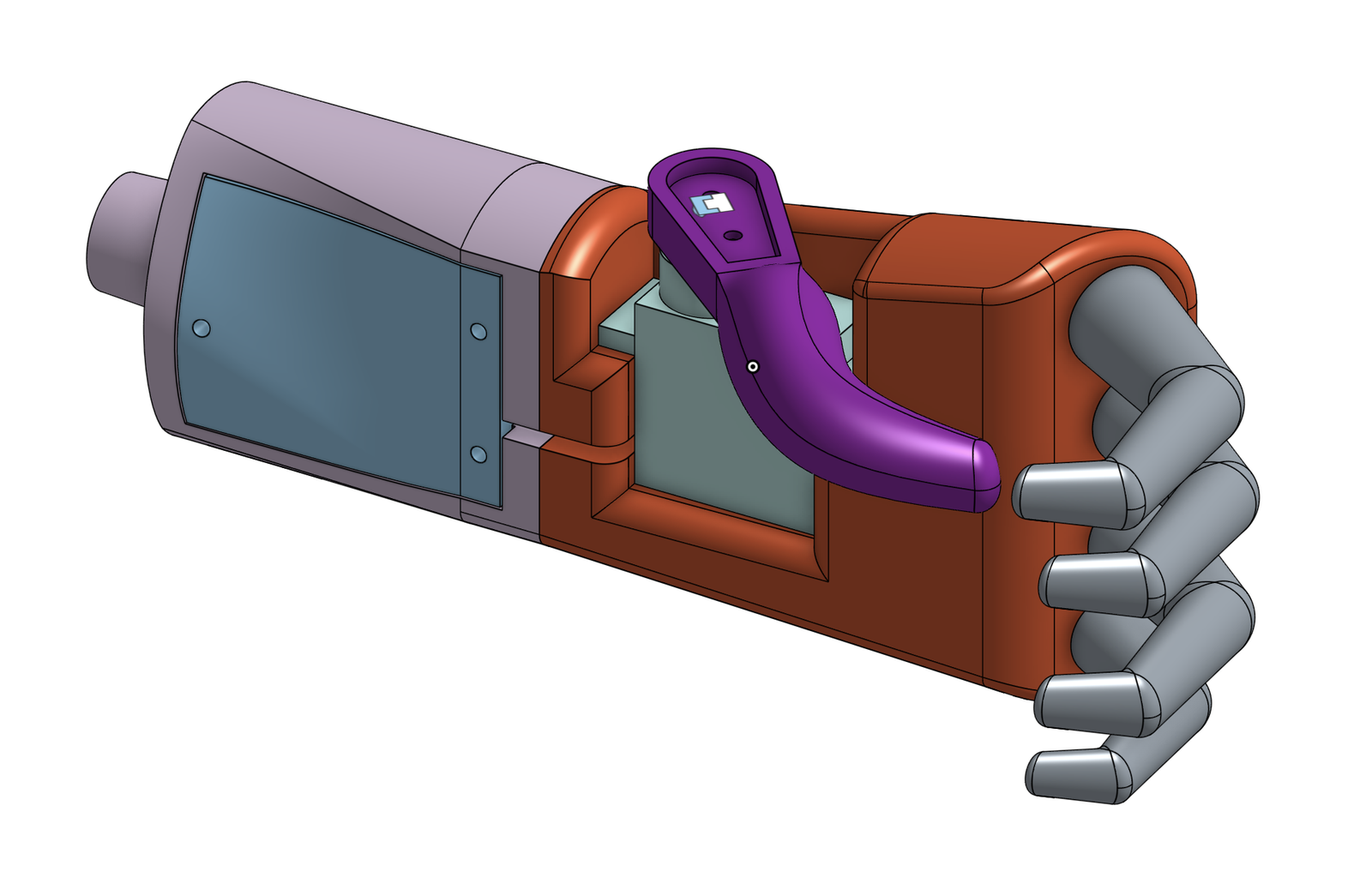
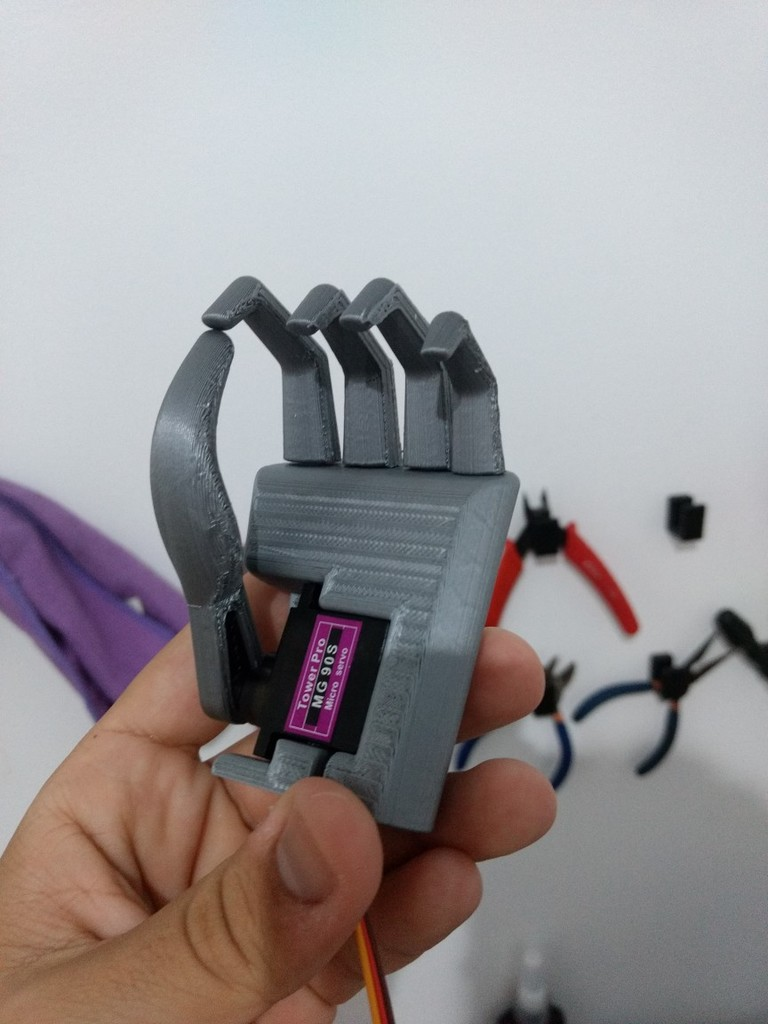
In today’s world, prosthetic technology is helping millions of people regain mobility and independence. With this simple school project, students can learn the basic concept of prosthetic hand design using a servo motor and Arduino. This DIY kit demonstrates how a child-sized prosthetic hand model can be built where only the thumb moves automatically, simulating a gripping motion.
This project is ideal for school science exhibitions, STEM learning, and for students who want to explore biomedical engineering concepts in a simple, hands-on way.
Assembly
Component Required
Arduino Nano / UNO (any compatible board)
Micro Servo Motor (SG90) – 1 Pc
3D Printed Child-Sized Hand Model (with movable thumb slot)
Jumper Wires
Breadboard (optional)
USB Cable for Arduino
5V Power Supply or Power Bank
Circuit Diagram
Servo Signal Pin → Arduino Pin D9
Servo VCC → 5V on Arduino
Servo GND → GND on Arduino
This simple connection allows the Arduino to control the thumb’s open and close motion.
Arduino Code
#include <Servo.h>
Servo thumb;
int pos = 0;
void setup() {
thumb.attach(9); // Thumb servo connected to D9
thumb.write(0); // Start from open position
delay(500);
}
void loop() {
closeThumb(); // Close thumb
delay(1000);
openThumb(); // Open thumb
delay(1000);
}
// — Functions —
void closeThumb() {
for (pos = 0; pos <= 60; pos++) {
thumb.write(pos);
delay(15);
}
}
void openThumb() {
for (pos = 60; pos >= 0; pos–) {
thumb.write(pos);
delay(15);
}
}
This code moves the thumb back and forth, showing how prosthetic hands grip objects.
Working Principal
The servo motor acts like a muscle, pulling the thumb joint in the 3D printed prosthetic hand. The Arduino board sends signals to control the servo, which moves the thumb up and down. By repeating this motion, the hand can simulate gripping – similar to how prosthetic hands assist real patients.
Applications in Real Life
Medical Engineering: Helps students understand how prosthetic limbs are designed.
STEM Education: Teaches programming, electronics, and biomechanics.
School Projects: Great for science fairs and exhibitions.
Awareness Project: Demonstrates how technology supports differently-abled children.
Conclusion
The Arduino Prosthetic Hand Project is a simple, low-cost, and innovative school project kit. It shows how servo motors can be used to mimic human hand movement, inspiring young minds to think about robotics, healthcare, and engineering solutions for real-life problems.
This kit is easy to assemble, needs only a few components, and is a perfect science project for students in classes 7 to 12.