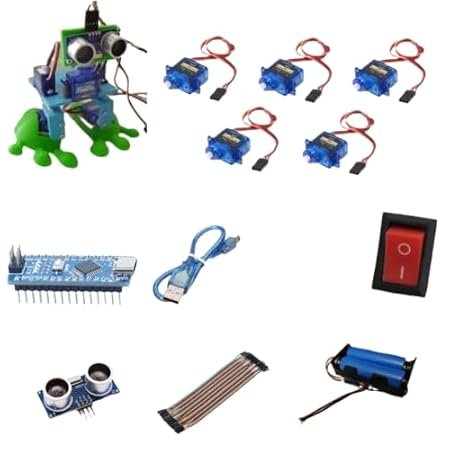
Robotics is one of the fastest-growing fields in technology, and robotic arms are at the heart of industrial automation. If you’re a student, hobbyist, or engineering enthusiast, understanding how robotic arms work is essential. One of the best ways to learn is by building your own using a 5 DOF robotic arm kit India.
This guide will help you understand the concept, working, and how you can build your own robotic arm easily.
What is a 5 DOF Robotic Arm?
A 5 DOF (Degree of Freedom) robotic arm is a mechanical arm that can move in five different axes or directions. Each degree of freedom allows the arm to perform specific movements, making it capable of complex tasks like picking, placing, rotating, and lifting objects.
The five movements typically include:
Base rotation
Shoulder movement
Elbow movement
Wrist rotation
Gripper opening/closing
This makes it highly versatile for both learning and real-world applications.
Why Choose a 5 DOF Robotic Arm Kit in India?
Choosing a 5 DOF robotic arm kit India is a smart decision for several reasons:
Affordable compared to imported kits
Designed for Indian students and curriculum
Easily available components and support
Ideal for school and engineering projects
Hands-on learning for STEM education
It bridges the gap between theoretical knowledge and practical implementation.
Applications of a 5 DOF Robotic Arm
A 5 DOF robotic arm is widely used in:
Pick and place operations
Industrial automation basics
Assembly line simulation
Object sorting projects
Educational demonstrations
Mini manufacturing setups
Students can use it in science exhibitions, engineering projects, and robotics competitions.
Components Used in a 5 DOF Robotic Arm Kit
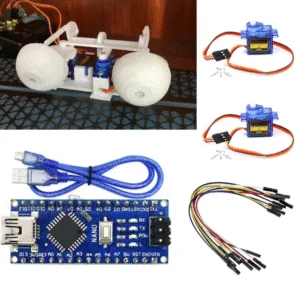
A typical 5 DOF robotic arm kit India includes:
These components work together to provide smooth and controlled motion.
How Does a 5 DOF Robotic Arm Work?
The working principle is simple but powerful:
Servo motors control each joint
Arduino sends signals to motors
Each motor rotates to a specific angle
Combined movements create complex actions
Programming defines how the arm behaves, making it programmable for different tasks.
How to Build Your Own 5 DOF Robotic Arm
Building your own robotic arm is easier than you think:
Assemble the mechanical structure
Attach servo motors to joints
Connect motors to controller
Upload Arduino code
Test each movement
Calibrate for smooth operation
With a good 5 DOF robotic arm kit India, all steps are beginner-friendly.
Why This Kit is Perfect for Students
This kit is ideal for:
It helps develop:
Practical skills
Problem-solving ability
Programming knowledge
Mechanical understanding
Tips for Better Performance
To get the best results:
Use stable power supply
Avoid overloading the arm
Calibrate servo angles properly
Secure all joints tightly
Test movements step by step
Future Scope of Robotic Arms
Robotic arms are used in:
Automotive industries
Medical robotics
Space exploration
AI-based automation
Smart manufacturing
Learning through a 5 DOF robotic arm kit India opens doors to these future technologies.
Conclusion
A 5 DOF robotic arm is a powerful learning tool that combines mechanics, electronics, and programming. Whether you are a student or a hobbyist, building your own robotic arm gives you real-world skills.
If you are looking to start your robotics journey, investing in a 5 DOF robotic arm kit India is one of the best decisions you can make.